
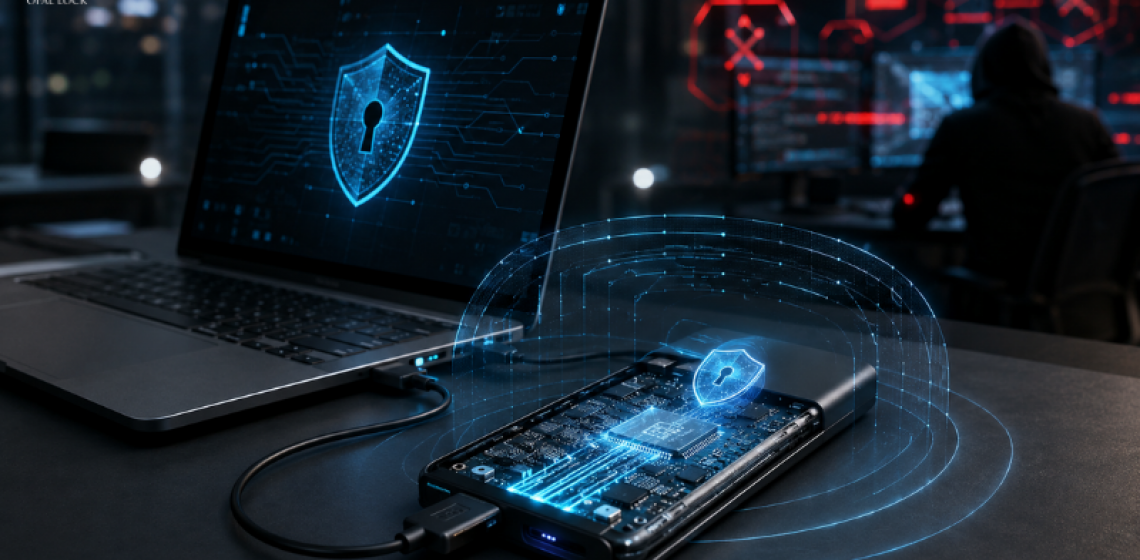
We are living in a digital age where information has become more valuable than ever, and securing your data is no longer optional. Imagine this: you lose your laptop or USB drive filled with sensitive data. The thought alone brings a wave of worry, knowing that data could end up in the wrong hands. And it is not a rare scenario. According to Forrester Research’s 2023 State of Data Security report, lost or stolen devices account for 17% of all data breaches. But what if you had a security solution that made your data inaccessible to anyone but you, no matter where your device ended up?
While software encryption has its place, it has real vulnerabilities, especially when the physical device falls into someone else’s hands. Over 40% of data breach incidents between 2005 and 2015 were caused by lost or stolen endpoint devices like laptops, tablets, and smartphones, according to TrendMicro. Hackers have countless tools to attempt cracking software-encrypted data, and when a drive is simply removed from a machine and plugged into another, the operating system that software encryption depends on is no longer even in the picture.
Hardware-based encryption with Opal SED (Self-Encrypting Drive) technology counters this directly. The encryption is built into the drive itself, not into the operating system sitting on top of it. Opal Lock is built on the Opal standard, a protocol developed by the Trusted Computing Group (TCG) to ensure that self-encrypting drives offer strong, standardized security across manufacturers. This means data is encrypted in real-time at the hardware level, so even if your drive is stolen or accessed without your knowledge, it remains inaccessible.
Imagine again that you lose your device. With SED technology in place, even a skilled attacker will encounter barriers that software-level tools simply cannot get around. Here is why:
Since the encryption operates within the drive controller itself, it is not exposed to traditional attacks aimed at the software or operating system layer. The encryption is active from the moment it is set up, and connecting the drive to a different computer changes nothing about that.
The authentication credential is the only key to the data. Even if the drive is physically removed from your computer, the data remains fully encrypted without it. Over 90% of security incidents involving lost or stolen devices result in an unauthorized data breach, but hardware encryption is specifically designed to break that pattern by keeping the data locked at the drive level regardless of what happens to the device around it.
Hardware-based encryption carries another practical benefit: speed. Because the drive’s own onboard chip handles all cryptographic operations, the host CPU carries none of that load. Encryption and decryption happen in real-time with no lag and no performance impact on the rest of the system. This is a meaningful difference from software encryption, where the encryption workload competes with every other process running on the machine.
Whether you have lost a device before, work with sensitive business data daily, or run a small business without a dedicated IT team, hardware-level encryption is one of the most reliable ways to ensure that data stays inaccessible without your authentication, whatever happens to the device itself. The global average cost of a data breach reached $4.44 million in 2025, with more than half of all breaches involving customer personally identifiable information such as names, emails, phone numbers, and financial details. Protecting the data at the hardware level, before it can be exposed, is one of the clearest ways to reduce that risk at the source.
Sources: Forrester Research, State of Data Security 2023 | IBM Cost of a Data Breach Report 2025 | Fidelity Height
Ready to buy
Activate hardware encryption on compatible Opal drives in minutes. Select your edition and complete purchase below.
